

In May 2024, the Union Cycliste Internationale (UCI) announced a new rule: starting January 1, 2026, all handlebars used in UCI-sanctioned road and track races must have a minimum width of 400mm, measured externally from drop end to drop end. The change is part of a broader set of safety-related equipment updates and was introduced following recommendations by SafeR, a UCI-appointed advisory group focused on rider safety.
The intention is to improve rider control and reduce crash risk. However, the reaction from riders, fitters, and manufacturers has been swift and critical. The regulation is seen by many as overly simplistic and potentially harmful especially for smaller athletes, women, and aerodynamics-focused riders.

(Source: UCI)
UCI’s Reasoning: Safety Through Standardization
According to the UCI, the rule was developed to promote safer race conditions by eliminating ultra-narrow handlebars, which they say may compromise bike control at high speeds or in crowded race situations. The policy comes alongside other rules, such as:
- Banning time trial helmets in mass-start road races
- Restricting fork widths to standardize front-end equipment
- Minimum requirements for tire width and frame clearance
While safety is a legitimate concern, the UCI has not released crash data or peer-reviewed studies directly linking narrower handlebars (below 400mm) to increased crash rates in UCI competition. The lack of published evidence has led many to question whether the rule is based on real-world rider input or a theoretical approach to risk reduction.
Narrow Handlebars Are a Proven Fit and Aero Tool
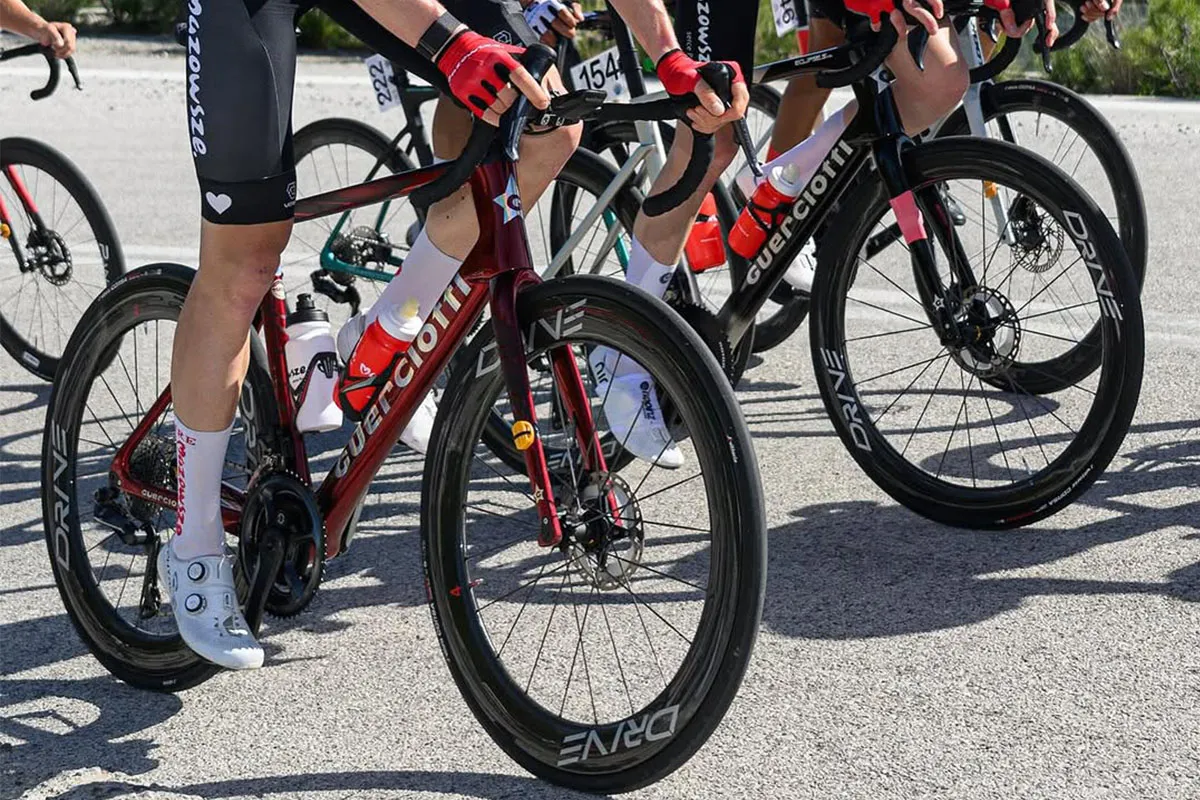
In modern cycling, cockpit setup is no longer a matter of guesswork. Thanks to systems like Retül, GebioMized, and Cyclologic, professional bike fit is based on 3D motion capture, biomechanics, and aerodynamic testing.
Handlebar width is a critical variable affecting:
- Rider aerodynamics
- Shoulder and wrist alignment
- Control and comfort over long durations
Why Narrower Bars Work
Reduced Frontal Area
Narrower handlebars reduce drag by lowering the rider’s frontal profile. Wind tunnel testing from British Cycling, Team Ineos Grenadiers, and aero engineers like Dan Bigham shows that switching from 400mm to 360mm bars can save 8 to 12 watts, a significant margin in time trials, breakaways, and sprints.
Better Fit for Smaller Riders
Riders with narrower shoulder,s particularly women, youth, and shorter cyclists, typically require 360–380mm bars to achieve proper wrist and scapular alignment. Using wider-than-needed handlebars can cause:
- Nerve impingement
- Shoulder tension and fatigue
- Decreased leverage in sprinting and cornering
Enhanced Climbing and Handling
Many professional climbers use narrower bars (down to 360mm or even 340mm in non-UCI events) to improve rhythm and stability while climbing out of the saddle.
Psychological and Tactical Control
A properly fitted handlebar fosters a stronger connection between rider and bike, boosting confidence and handling precision critical in high-pressure race environments.
Ignoring Body Diversity
Shoulder Width Data
- Elite male shoulder width:400–460mm
- Elite female shoulder width: 360–400mm
- Recommended bar width: Shoulder width ±10mm (measured from acromion to acromion)
This means many elite female riders and smaller male riders are best matched to 360–380mm handlebars. Under the new rule, they’ll be forced to use bars that exceed their optimal fit range, leading to:
- Poor hand and wrist alignment
- Increased fatigue
- Elevated risk of repetitive strain injuries
Despite the growth of women’s cycling, no UCI exemption has been introduced for women’s pelotons or smaller-bodied athletes.
Professional Riders and Experts Are Speaking Out

Several prominent figures have voiced concern:
- Dan Bigham, a UCI Hour Record holder and aerodynamics specialist, used 270mm handlebars on the track under UCI rules for improved aero efficiency. His control was never questioned, and his results spoke volumes.
- Pro women on UCI Women’s WorldTour teams have long used 360–380mm bars with flared drops, especially in climbing stages and sprints without incident or loss of control.
- Evensome talll riders (over 6 feet/183cm) prefer narrower bars due to wrist alignment and aerodynamic gains.
The Rule Has Loopholes, and That Raises More Questions
The UCI defines bar width as an external measurement at the drops, not at the hoods. This opens the door to workaround designs.
Already Emerging Workarounds:
- Flared drop bars(popular in gravel racing) that meet the 400mm spec at the drops while keeping hoods as narrow as 320–340mm
- Back-swept or “Y” shaped barsthat curve outward to meet regulations, even if the actual grip area remains narrow
- Artificial lateral extensions that add non-functional width to bar ends
These adaptations do not improve safety, but they comply. It shows that the rule encourages design manipulation instead of addressing rider needs directly.
The Broader Impact on the Cycling Industry
Bike Fitters
Professionals will be forced to balance optimal fit versus UCI legality. Riders racing in UCI events may have to compromise comfort or performance to meet the regulations.
Component Brands
Handlebar makers like Zipp, FSA, PRO, Deda, and ENVE will need to:
- Phase out or redesign narrower bars
- Reconfigure product lines
- Coordinate with pro teams and mechanics for cockpit changes
Women-Focused Brands
Manufacturers such as Liv, Ella, RE:FINED, and Canyon WMN may lose the ability to offer race-legal bars that are anatomically correct for women, contradicting their design philosophy and limiting their competitiveness.
What This Means for Elitewheels

While Elitewheels doesn’t produce handlebars, the company plays a key role in overall aerodynamic system performance.
Many riders who choose Elitewheels, such as the Drive 36D II, Drive G36, or Marvel 36D II, do so to lower drag and enhance efficiency. These setups are often paired with narrow handlebars, creating a cohesive, optimized frontal profile.
The 400mm bar rule threatens to undo this synergy.
For example:
- A rider using tubeless 28mm tires on a 21mm internal rim with a Drive G36 wheelset may now have to change cockpit width, affecting posture, drag, and reach.
- Any increase in frontal area from a wider bar must be offset by improvements elsewhere, or performance will suffer.
As a brand that supports precision fit and real-world performance, Elitewheels encourages a system-based view of regulation, one that respects the interplay between fit, frame, wheel, and rider.
A Smarter Alternative: What the UCI Could Do
Rather than enforce a fixed minimum, the UCI could implement policies grounded in fit science, rider consultation, and flexibility.
Practical Alternatives:
- Shoulder-Based Guidelines
Allow handlebar widths within ±20mm of a rider’s measured shoulder width. - Gender-Based Allowances
Establish a separate regulation range for the UCI Women’s WorldTour based on anthropometric data. - Flared Bar Exceptions
Permit narrow tops (e.g., 360mm at hoods) if drop width meets the 400 mm standard in gravel and mixed-terrain disciplines. - Professional Exemptions
Allow certified bike fitters to submit data supporting narrower bar use for specific riders.
Conclusion
Cycling is advancing technologically, biomechanically, and socially. The UCI’s 400mm handlebar rule may be rooted in safety concerns, but without evidence, rider input, or flexibility, it risks flattening individuality and hindering progress.
At Elitewheels, we believe in rider-first design. Whether it’s choosing the right aero wheelset, dialing in tubeless setups, or matching cockpit fit to riding goals, performance depends on personalization.
Cycling thrives when innovation and inclusivity go hand-in-hand. It’s time for regulations to reflect that.


